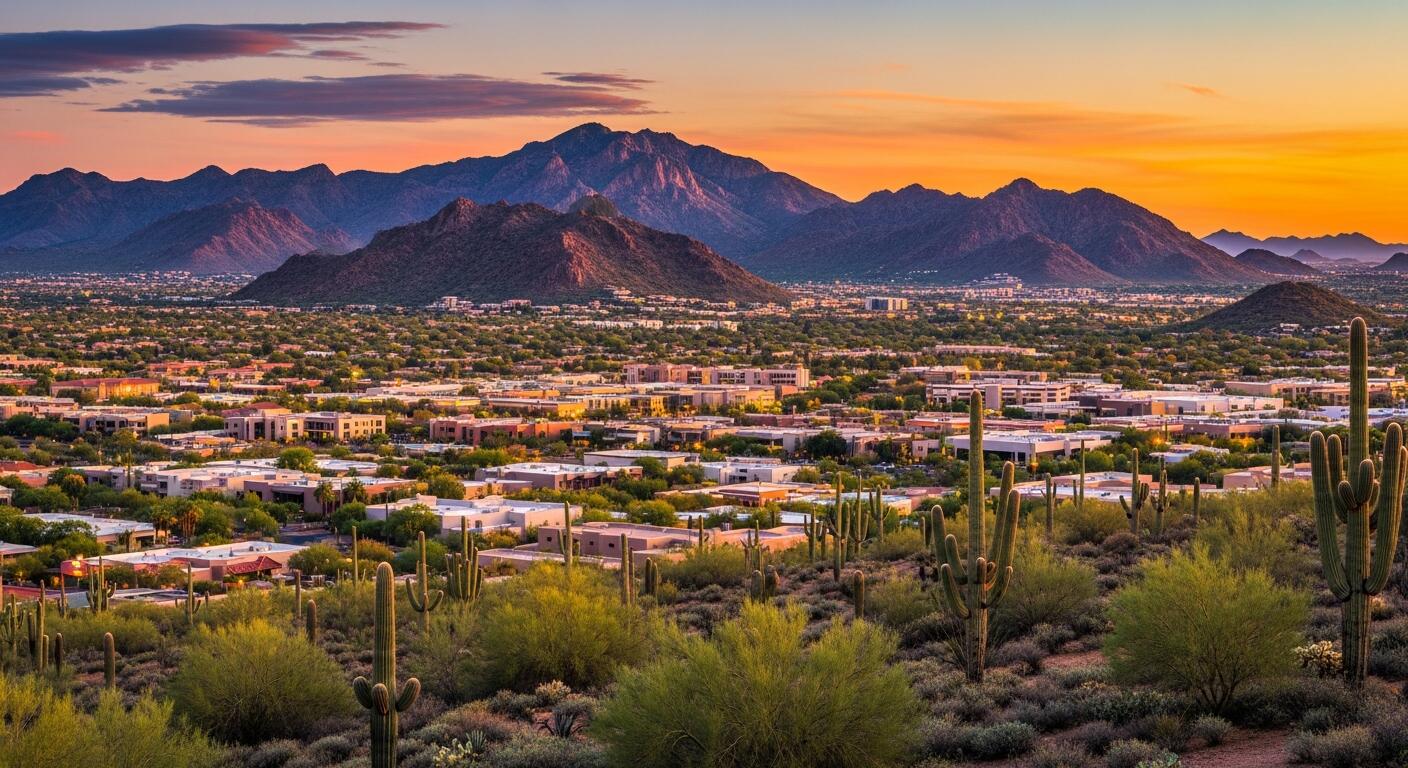
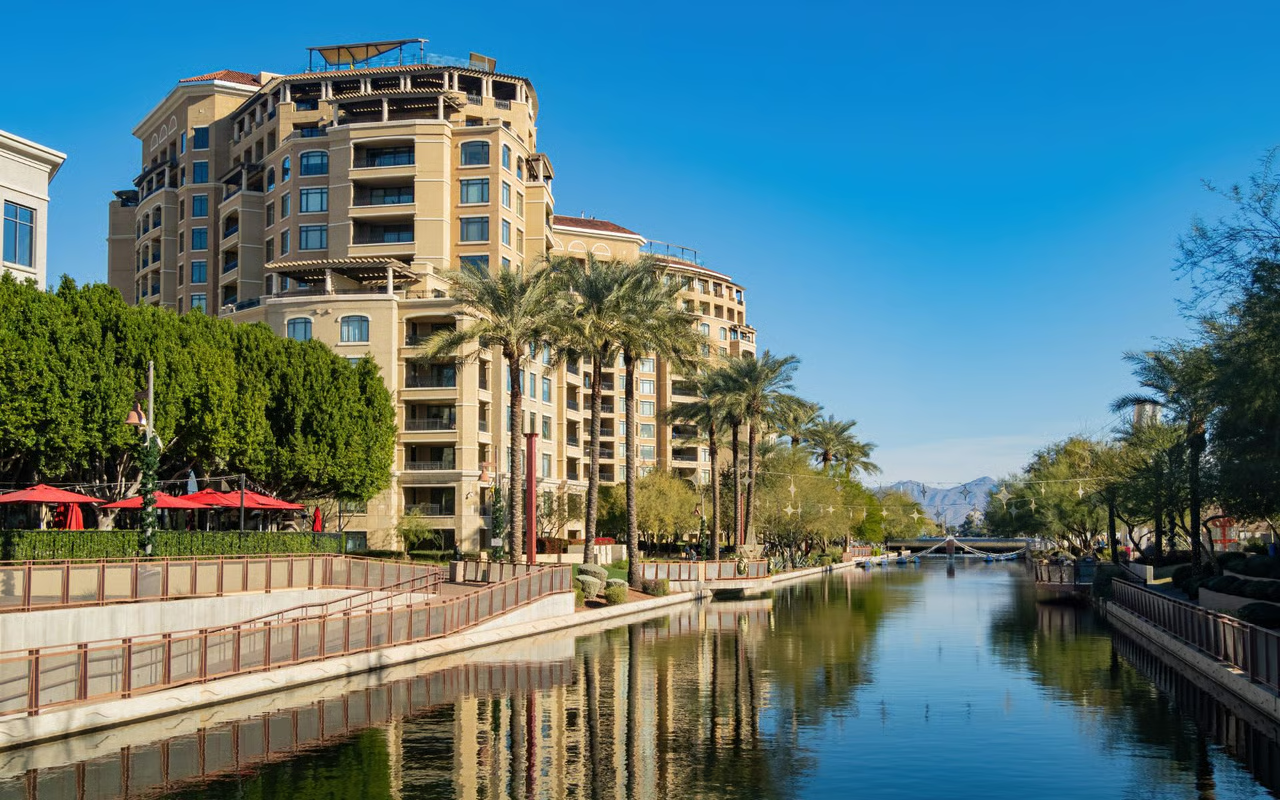
Scottsdale runs three distinct exchange economies at once — the Airpark employment core, the Old Town hospitality district, and the golf-resort communities spreading north — and a citywide replacement search has to run all three on the same fixed calendar rather than treating them as separate timelines.
Scottsdale's Exchange Asset Mix
North Scottsdale's Airpark carries the office and flex inventory tied to corporate tenancy; Old Town carries retail, hospitality-adjacent, and adaptive-reuse buildings tied to the entertainment district; and the golf-resort communities further north carry smaller-format retail and professional suites serving a resort and estate-home population.
No rent control and a generally landlord-friendly regulatory climate make Scottsdale attractive to exchange-in capital from other states, which keeps competition for clean replacement candidates real — a property that looks available on Monday can have a competing offer by Wednesday.
Investors bringing proceeds in from another state often default to the submarket they've heard of — usually Old Town or North Scottsdale generally — without realizing how different the underwriting looks across an Airpark office building, an Old Town retail storefront, and a golf-community retail pad, so the first conversation typically resets those expectations against what's actually available and how each asset type gets financed.
How The 45-Day Window Runs Across Scottsdale Submarkets
Running a citywide search means tracking three separate listing rhythms at once: Airpark office and flex turnover, Old Town retail and hospitality churn, and the thinner, slower-moving golf-community inventory — each gets its own watch list from day one of the exchange rather than one combined feed that buries the slower-moving candidates.
A property in any of the three gets the same underwriting discipline the moment it's flagged — lease abstract, title check, and a rough financing read — so a candidate from the golf-community submarkets isn't left waiting behind an Airpark deal just because it surfaced later.
A single coordinator - whether that's the investor's broker, advisor, or the qualified intermediary - should hold the master calendar across all three tracks, since three separate watch lists run by three separate people tend to drift out of sync right when the identification deadline is closest.
Building A Citywide Identification Framework
A Scottsdale-wide identification list typically draws from each economy rather than concentrating in one:
- Airpark office or flex building
- Old Town retail or adaptive-reuse property
- Golf-community retail pad or professional suite
- Backup candidate in a neighboring East Valley submarket
- DST allocation if proceeds run ahead of available inventory
Managing The 180-Day Close Through Summer Leasing Seasonality
Scottsdale's leasing activity slows through the summer heat months, which can thin out both new listings and tenant response times right in the middle of a 180-day window that started in spring or early summer — that seasonality gets built into the schedule up front rather than treated as an unexpected delay.
Lender and title deadlines get set with that slowdown already priced in, so a slower August response from a leasing office or a title company doesn't push the closing date past day 180 — the calendar accounts for the season before it becomes a problem.
The same summer-slowdown adjustment carries into the relinquished-property side of a concurrent sale, since a seller's buyer can be just as affected by slower summer response times as the investor's own replacement search, and both sides of the transaction get scheduled with that in mind rather than assuming a spring timeline holds through August.
What The Closing File Should Contain By Day 180
Across any of the three Scottsdale exchange economies, the closing file by day 180 should hold the signed identification notice, the purchase agreement, a title commitment, financing confirmation, and a written note from the investor's tax advisor confirming the replacement property qualifies — assembled progressively through the window rather than pulled together in the final week.
That same file becomes the CPA's starting point for tax reporting on the exchange, so the paperwork discipline built during the exchange itself is what keeps reporting straightforward months later.
Common 1031 Exchange Questions
Why does a citywide Scottsdale search track three different submarkets at once?
The Airpark, Old Town, and the golf-resort communities each have their own asset types and listing rhythms, so tracking them separately from day one keeps a slower-moving golf-community candidate from being buried behind faster Airpark or Old Town activity.
Does Scottsdale's landlord-friendly climate affect exchange competition?
It does — the absence of rent control and a generally favorable regulatory environment draws exchange-in capital from other states, so clean replacement candidates can draw competing offers quickly and need to be underwritten as soon as they're flagged.
How does summer heat-season leasing affect a 180-day close?
Listing activity and tenant response times both slow through the hottest months, so that seasonality gets built into the lender and title schedule from the start rather than discovered as an unexplained delay mid-window.
What belongs on a citywide identification list?
A mix drawn from each of Scottsdale's exchange economies — Airpark office or flex, Old Town retail or adaptive-reuse, and golf-community retail or professional space — plus a DST allocation if proceeds exceed what the local market can absorb.
Is a neighboring East Valley submarket a realistic backup for a Scottsdale exchange?
Yes — Mesa, Tempe, and Chandler inventory is commonly used as a backup track when Scottsdale-specific candidates are running behind schedule, since the same 45-day and 180-day dates apply regardless of which side of the city line the replacement sits on.