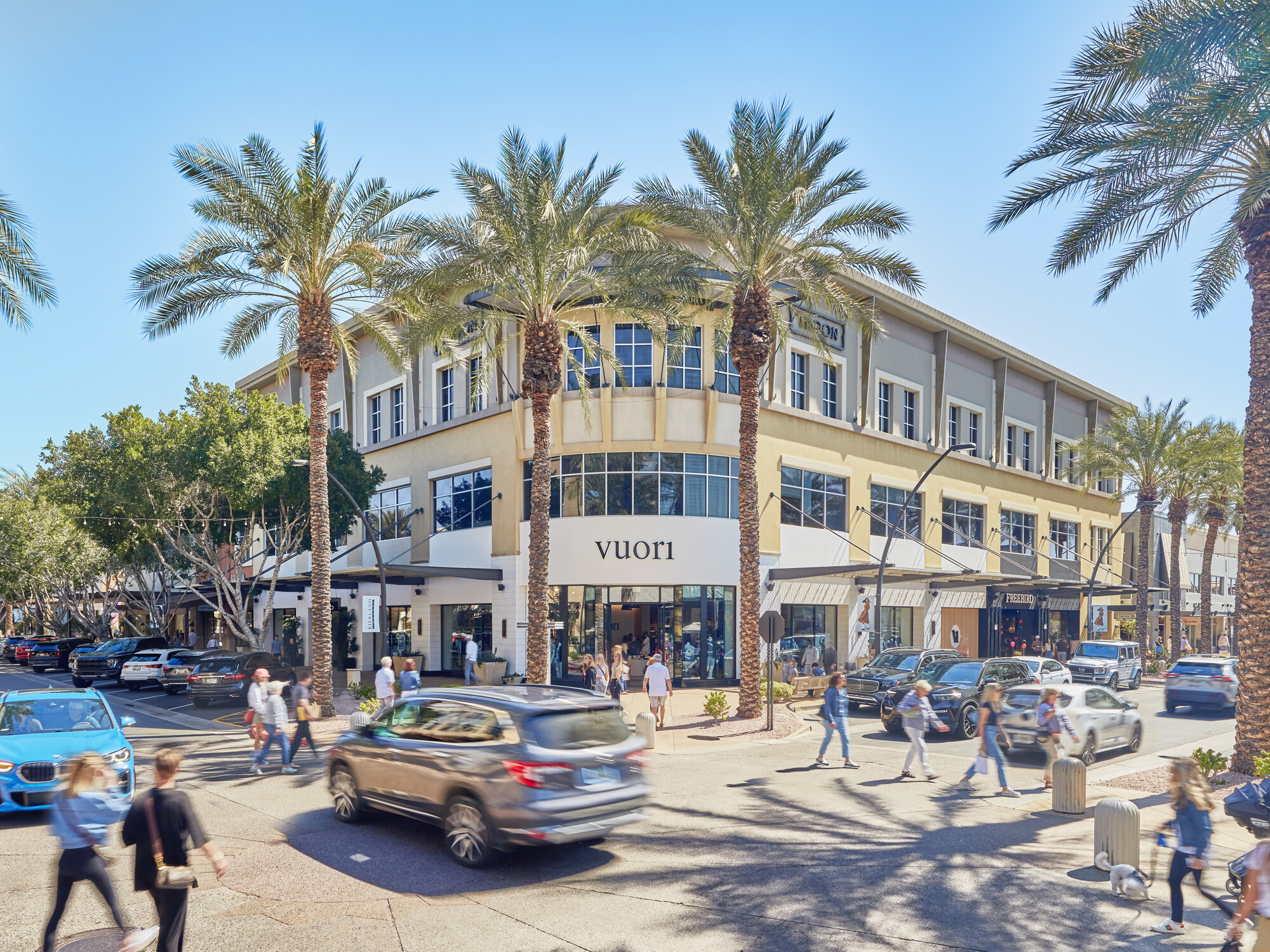
Gainey Ranch is a resort and golf community along Scottsdale Road, home to the Hyatt Regency Scottsdale Resort and Spa and a set of golf courses that shape the commercial demand around it. Investors exchanging out of a Gainey Ranch holding are typically selling into professional office or boutique retail that leans on resort visitor traffic and high-income residents rather than daily pass-through commuters, and the replacement search should reflect that specific demand base.
Resort-Adjacent Office and Retail
Professional and medical office near Doubletree Ranch Road and Hayden Road serves both the residential community and the broader Scottsdale Road corridor, while retail at the Shops at Gainey Village caters more directly to resort guests and golf-course members. That mix gives investors two distinct demand drivers to weigh, one tied to daily household use and the other to visitor and seasonal patronage.
Because the Hyatt Regency and surrounding golf courses draw a seasonal visitor base, retail performance here can vary meaningfully between winter season and summer months. A rent roll pulled from a single quarter should be checked against a fuller annual picture before it drives a valuation decision.
Sequencing the Identification Notice Around Resort Seasonality
An identification notice built entirely from peak-season numbers risks overstating what a Gainey Ranch replacement will earn across a full year. The 45-day window should be used to gather both winter and summer performance data before ranking candidates, rather than whatever numbers a seller happens to hand over first.
- Request a full twelve months of tenant and revenue data before ranking any Gainey Ranch retail candidate
- Confirm Scottsdale Road and Doubletree Ranch Road access for the exact property, not the broader community
- Verify lender comfort with resort-adjacent collateral before naming a candidate on the identification list
- Separate golf-course-driven retail demand from general residential demand when reviewing tenant mix
- Retain records on every property considered and declined in case the three-property rule needs later review
Where Resort Ties Complicate Diligence
A retail tenant whose business depends heavily on Hyatt Regency guest traffic carries different risk than one serving year-round residents, and that distinction matters for how durable the income really is. Asking a seller directly what share of revenue ties to resort visitors, rather than assuming it from the tenant list alone, gives a clearer picture before an offer is made.
Golf-course-adjacent office space can also carry membership or association agreements that affect how a property can be used or leased going forward. Reviewing those agreements early prevents a surprise restriction from surfacing during a lender's final underwriting.
Closing on Schedule Despite Seasonal Swings
Because resort seasonality affects both income and buyer interest, a purchase contract on a Gainey Ranch replacement should fix a closing date early rather than leave it open-ended, so the 180-day deadline is not put at risk by a seller waiting for peak season to finish before committing to terms.
Investors should confirm sale proceeds and entity details with their qualified intermediary before the identification deadline, and discuss with their tax advisor how any change in debt level on a resort-adjacent replacement affects boot exposure compared to the property being sold.
Balancing Resort Exposure Against Steadier Alternatives
An investor should weigh how much of a Gainey Ranch property's income depends on resort and golf-course visitor traffic against a steadier, more residential alternative nearby. Both can support a successful exchange, but they carry different risk profiles that deserve an honest comparison rather than an assumption that proximity to the Hyatt Regency automatically means stronger performance.
That comparison should happen before the identification notice is filed, since switching from a resort-adjacent candidate to a residential one mid-search costs days the 45-day window does not extend. Keeping the qualified intermediary informed of which property type is actually being pursued keeps the closing schedule grounded in reality. Making that decision deliberately, rather than defaulting to whichever property happened to surface first, is what keeps the 180-day deadline from becoming a source of last-minute pressure.
Common 1031 Exchange Questions
What kind of commercial property is available in Gainey Ranch?
Professional and medical office near Doubletree Ranch Road and Hayden Road, along with resort-adjacent retail at the Shops at Gainey Village, make up most of the inventory, shaped heavily by the Hyatt Regency Scottsdale and surrounding golf courses.
How much does resort seasonality affect a replacement property's value here?
It can affect it meaningfully, since retail performance often differs between winter visitor season and summer months. Reviewing a full year of data rather than one quarter gives a more reliable picture before an offer is made.
Do golf-course association agreements affect commercial property use?
They can. Some office and retail space tied to the community's golf courses carries membership or association agreements that affect leasing or use, so reviewing those terms early helps avoid a surprise restriction later in underwriting.
Who manages the exchange proceeds and paperwork?
A qualified intermediary holds sale proceeds and prepares identification and closing documentation. Investors should confirm every figure directly with the intermediary and discuss boot or leverage questions with their own CPA or tax advisor.
Why does the closing date need to be fixed early for a resort-adjacent property?
A seller waiting for peak season to end before committing to a closing date can put the 180-day exchange deadline at risk, so a fixed date should be negotiated into the purchase contract before the identification notice is filed.