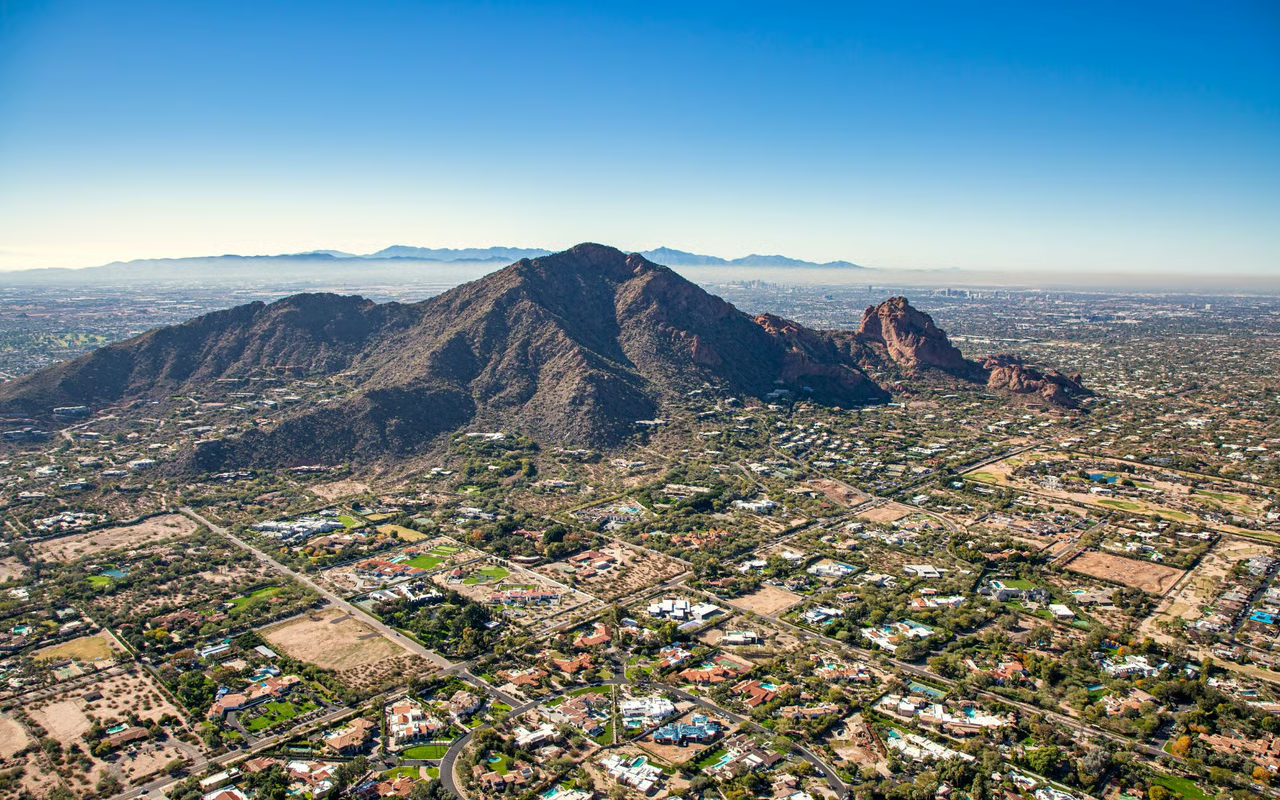
Grayhawk sits inside the North Scottsdale grid where Loop 101 meets Thompson Peak Parkway and Hayden Road, and 1031 exchange work here starts with an honest read of the local product: golf-anchored retail pads, patio-home rental clusters, and small professional suites rather than large single-tenant boxes. Every replacement candidate gets logged against the exchange clock the day it surfaces, not after a decision is made.
Golf-Community Retail And Office Stock
Grayhawk's commercial footprint grew up around the golf club and the master-planned housing built through the 1990s, which means the retail pads along Hayden Road and Thompson Peak Parkway tend to run small — single-tenant restaurant buildings, service retail, and a handful of multi-suite strip centers rather than regional anchors. Professional and medical-office suites cluster along the same corridor, serving the surrounding patio-home and condo population rather than a citywide draw.
That scale changes how a replacement list gets built. A single Grayhawk retail pad rarely satisfies exchange proceeds on its own for a mid-size seller, so the property search usually pairs one local asset with a second candidate elsewhere in the Airpark or Old Town corridor to clear the 200-percent test without overreaching on debt.
Sale timelines on these smaller properties often move faster than the citywide average once a serious buyer is engaged, because the ownership groups behind them tend to be individual investors or small partnerships rather than institutional sellers running a formal marketing process — which cuts both ways: less competition from an auction-style bid process, but also less predictability about when a given owner actually decides to sell.
Sequencing The 45-Day Window Against Thin Listings
Small-format inventory turns over unevenly here — a pad can sit listed for months, then three comparable spaces hit the market inside the same week. The identification clock does not wait for that rhythm, so the work starts with a standing list of every active and pocket listing in the corridor before day one of the exchange, updated on a set weekly cadence rather than reactively.
When a strong candidate appears mid-window, it gets underwritten immediately rather than queued behind earlier finds, because a two-week delay in a thin market can mean the space is gone before the identification notice is filed.
Building A 200-Percent Slate From Smaller Lot Sizes
A Grayhawk identification slate typically mixes asset types to reach proceeds without concentrating risk in one small building:
- Golf-corridor retail pad or restaurant building
- Multi-suite professional or medical-office space
- Patio-home or condo rental cluster nearby
- Backup NNN pad along Hayden Road
- DST allocation sized to remaining proceeds
Closing-Day Coordination With Lender And Title
Lender underwriting on smaller Grayhawk properties can move faster than on institutional assets, but it still needs a fixed handoff schedule: appraisal ordered the week identification closes, title commitment reviewed against HOA and golf-easement language specific to the community's plats, and loan documents circulated a set number of days before the 180-day date, not the week of it.
Every step gets logged against the calendar the investor and qualified intermediary already agreed on, so a delay in one office — lender, title, or the seller's counsel — shows up immediately instead of surfacing three days before closing.
The same discipline applies to the seller side of a Grayhawk deal when the investor is also selling into a fresh exchange — relinquished-property closing statements, reporting details, and the qualified intermediary's transfer instructions all get confirmed the same week as the replacement purchase agreement, so neither side of the transaction becomes the one holding up the other.
Documentation The File Should Hold By Filing
By the time the identification notice is signed, the Grayhawk file should hold a property description precise enough to satisfy the identification rules, the current purchase contract or letter of intent, a title commitment, and a written note from the investor's tax advisor confirming the property qualifies as like-kind replacement real estate.
That same file carries forward into the 180-day period as the working record for the lender, the closing attorney, and the CPA preparing the exchange's tax reporting, so nothing has to be reconstructed from memory or email threads once the transaction moves into final underwriting.
Common 1031 Exchange Questions
Why does a Grayhawk exchange often need two replacement properties instead of one?
Grayhawk's commercial stock runs small — golf-corridor retail pads and professional suites rarely match a mid-size seller's proceeds on their own, so pairing one Grayhawk asset with a second candidate is common practice for clearing the 200-percent identification rule without taking on excess debt.
How early should identification start if Grayhawk listings are thin?
Tracking should begin before the 45-day clock opens, using a standing list of active and off-market Grayhawk-corridor spaces so a candidate that surfaces mid-window can be underwritten within days rather than treated as a fresh search.
Does golf-community HOA language affect exchange timing?
Yes — title review needs to confirm HOA assessments and any golf-easement restrictions before the identification notice is finalized, since those terms can affect financing and should not be discovered during the final week before closing.
What happens if no single Grayhawk property clears the exchange proceeds?
A DST allocation sized to the remaining balance is a common backstop, sequenced into the identification list alongside the physical property candidates so proceeds are fully covered without forcing an oversized purchase.
Can financing move faster on smaller Grayhawk assets?
Often yes, but the schedule still needs to be fixed in advance — appraisal, title, and loan documents each tied to a specific day relative to the 180-day close rather than assumed to happen automatically because the deal is small.